Hi y'all!
We just wanted to let you know that we now have a new website! It's InGoodHeartFarm.com
Please check us out there!
To say that the soil is in good heart is to say that it is healthy, in good cultivation, & in good spirit. To say that a person is in good heart is to say that they are cultivating wisdom, courage, & good spirit. Ben & I felt that our farm name should represent our vision & we couldn’t think of a better representation of what we want to do & what we want to be in our world than In Good Heart.
Monday, March 3, 2014


Monday, June 24, 2013
Farm It Forward, Week 4
Here's a post written by Billie & Brittany, the folks leading the cooking classes for Farm It Forward. We're visiting the class this week & really looking forward to it. Enjoy! - Patricia
Farm it Forward Week 4
It
was another delicious week in the teaching kitchen at Wake Cooperative
Extension for our Farm it Forward class. Here’s a look at one share’s
worth of beautiful produce from In Good Heart Farm. 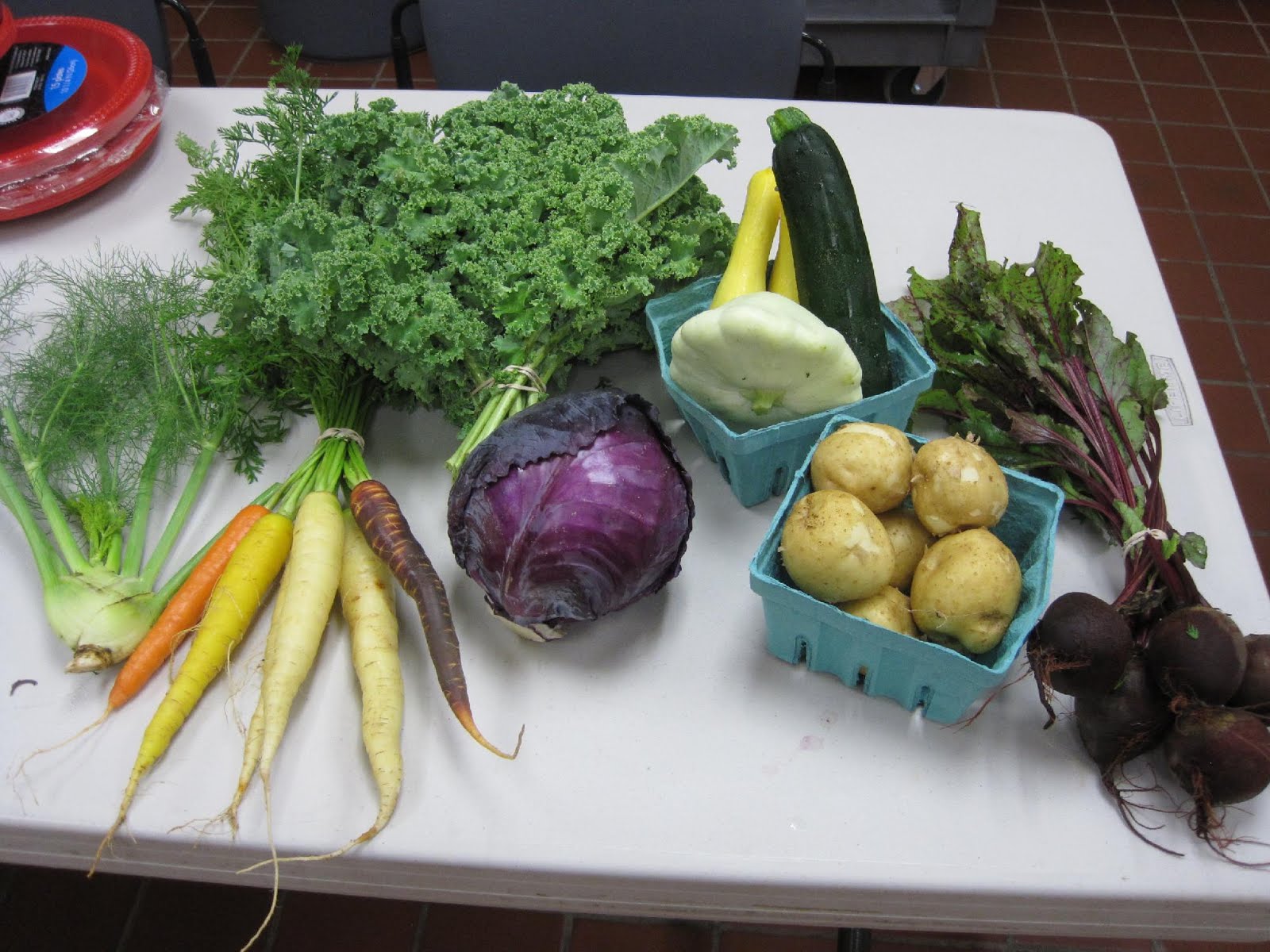
We
started off as we do every class by introducing each new or unfamiliar
produce item and talking about its basic qualities and how best to
approach chopping/slicing it. This week, we also did a demonstration on
how to blanch and freeze vegetables for later use. (For all the
information you could ever need on freezing, canning, and more, check
out the National Center for Home Food Preservation’s treasure trove of a
website: http://nchfp.uga.edu)
Each
of our participating families then worked on one of four recipes
selected and pre-tested by the instructors to highlight the week’s
produce.
Pasta with greens and white beans. Kale
and beet greens together with diced tomatoes, pasta, and cannellini
beans. A very nutritious dish with a classic Italian flavor that works
as a side or a meal in itself. Below: a mother and son cooking team adds chopped kale to the pan for this dish.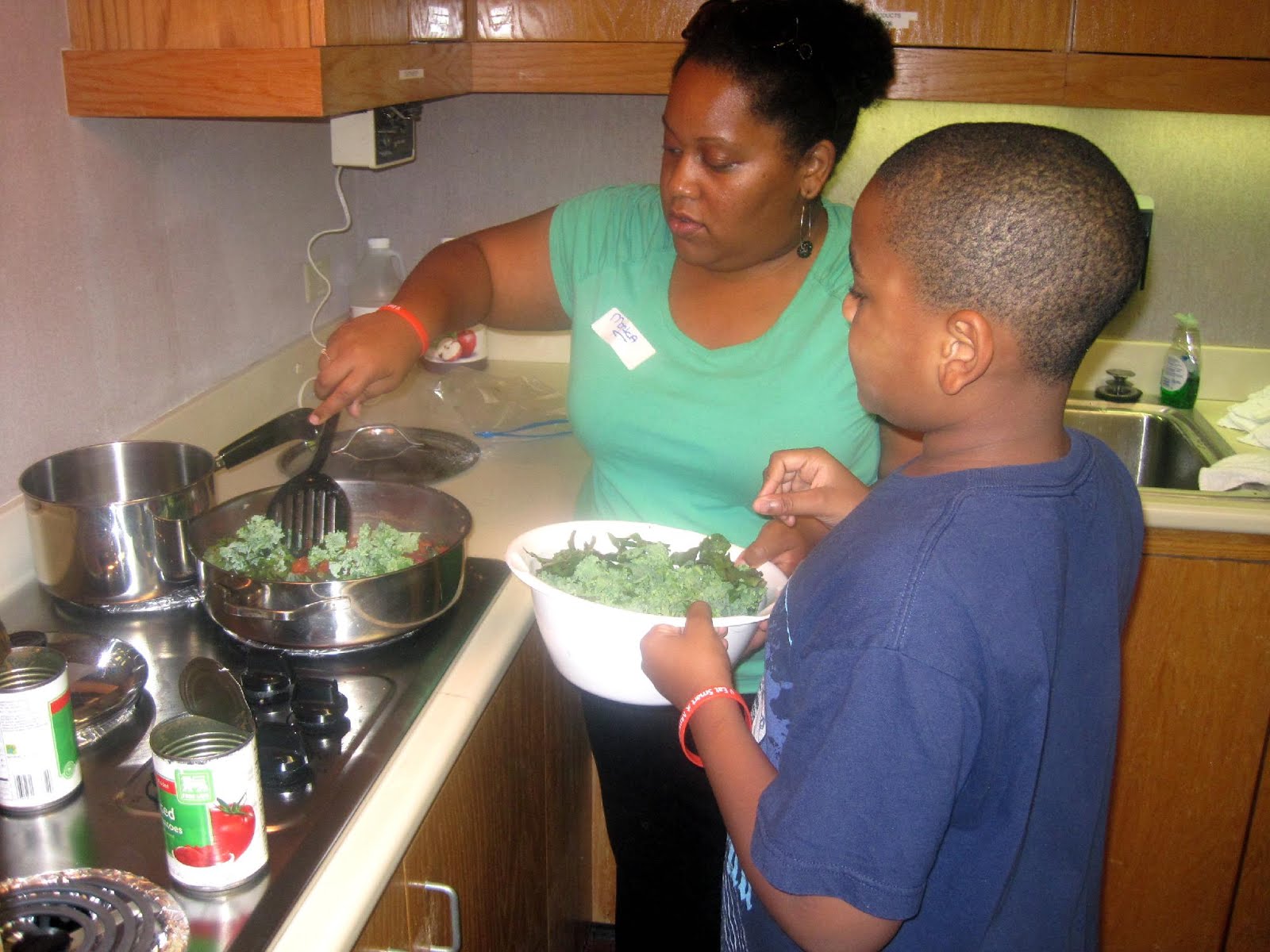
Kale slaw.
Fresh kale, carrots, fennel bulb, and red cabbage all got shredded into
a big bowl and dressed with a simple vinaigrette for a very light and
tasty slaw that packs the whole rainbow into one bowl. Photo by 10-year-old Justyn.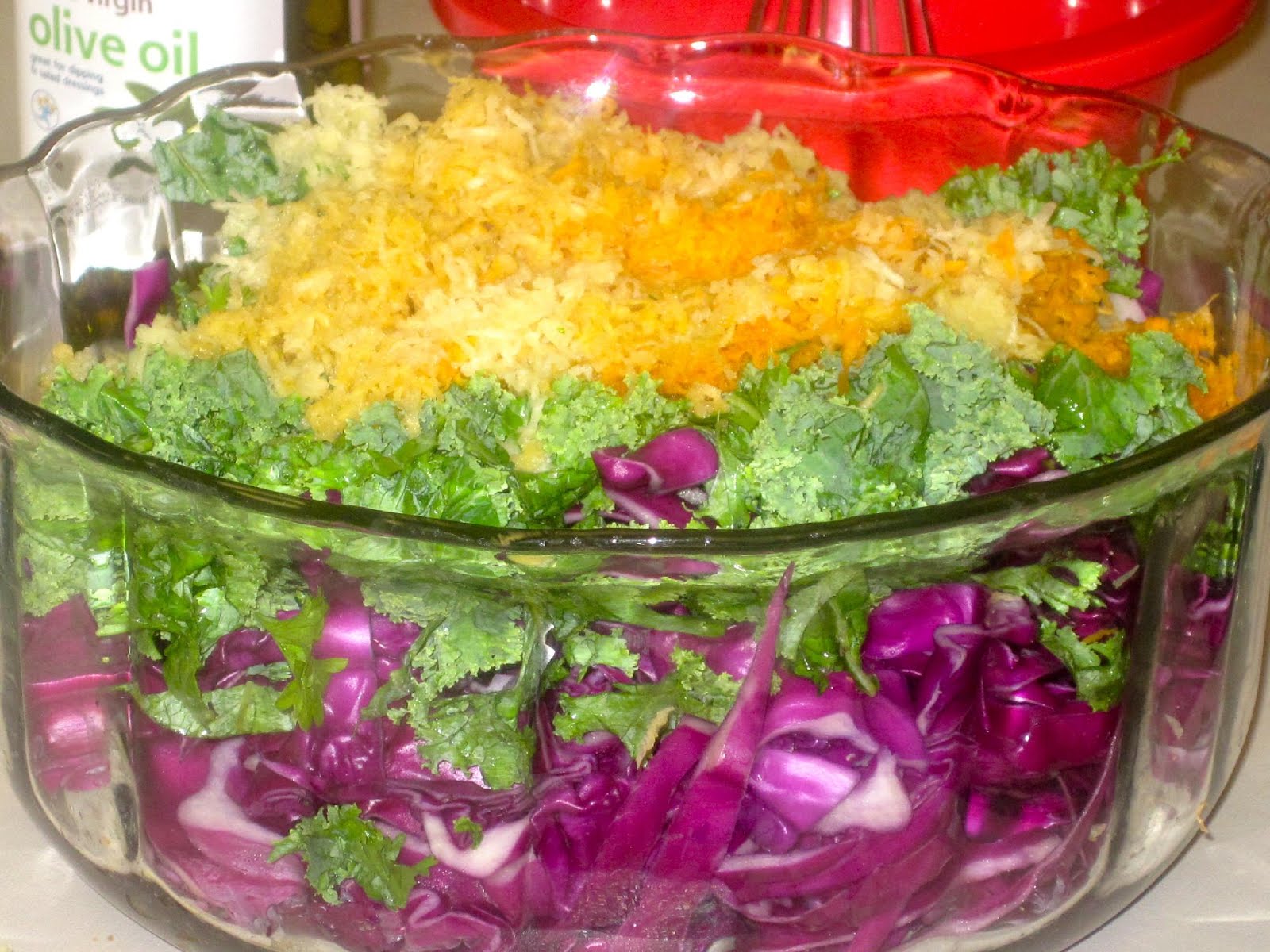
Salmon burgers.
Canned salmon is an often-overlooked option that we wanted to highlight
in class because it gets you all the lean protein and much of the
omega-3 fat of wild Alaskan salmon in a form that’s far less expensive
than fresh or frozen. You can get it boneless and skinless, but after
canning the bones are soft and quite edible, and add lots of extra
calcium to the meal. We added grated carrots and squash, diced celery,
and lemon zest and juice to the original salmon burger recipe to add
color, flavor, and good veggie nutrition. We also made a quick herbed
mayonnaise with fresh parsley and fennel fronds in the blender to spread
on our burger buns for serving! Below: Making the salmon mixture into burgers for baking. Photo by 10-year-old Justyn.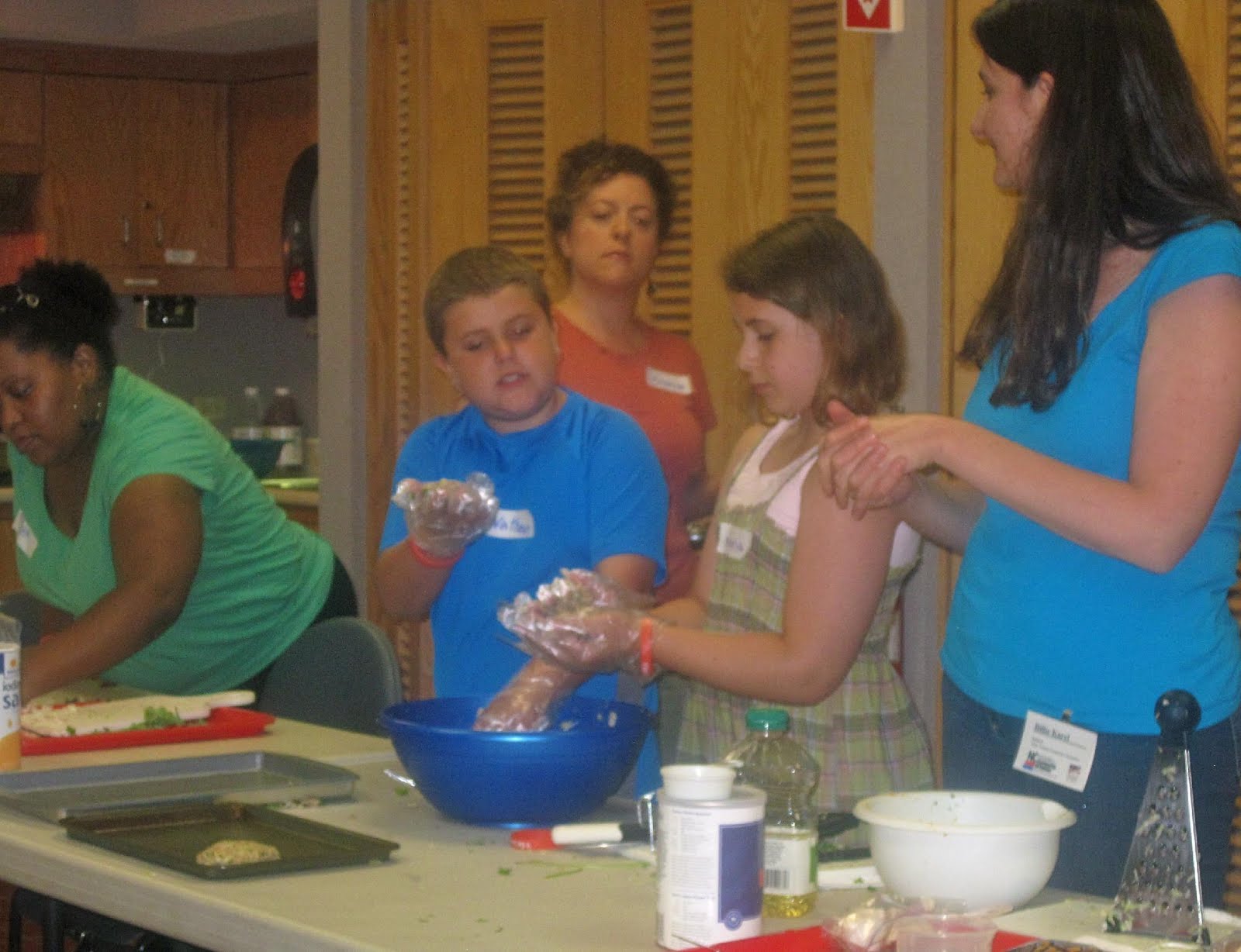
Beet brownies.
Our class is full of cake and cookie enthusiasts, and they love recipes
for baked goods that use vegetables in unexpected ways. Adding a bunch
of cooked mashed beets to brownie batter adds deep red-purple color,
moisture, and sweet flavor, not to mention healthy vitamins and fiber.
But in the end, you just taste chocolatey goodness! Below:
Team kale slaw in the foreground and team beet brownies in the
background, with instructors Brittany Crump (green sweater) and Kristin
Larson (white sweater) assisting.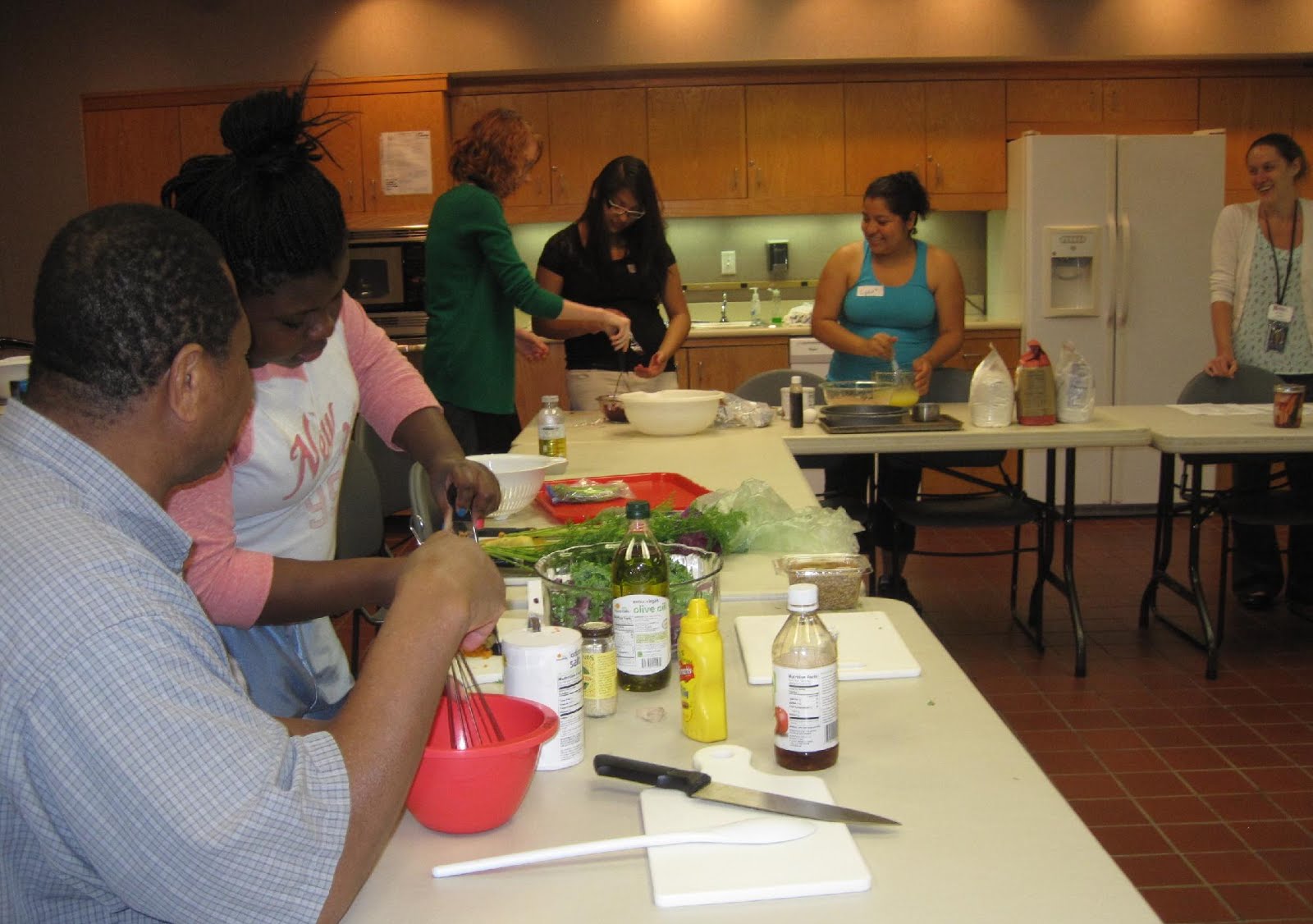
Bonus fridge pickles!
Last week, we made a batch of fridge pickles with lovely cucumbers,
carrots, and turnips from In Good Heart farm, and left them in the
teaching kitchen fridge over the week to steep up and get tasty. We
enjoyed them this week alongside our salmon burgers. The purple carrots
turned the pickles and brine in some jars hot pink! Photo by 10-year-old Justyn.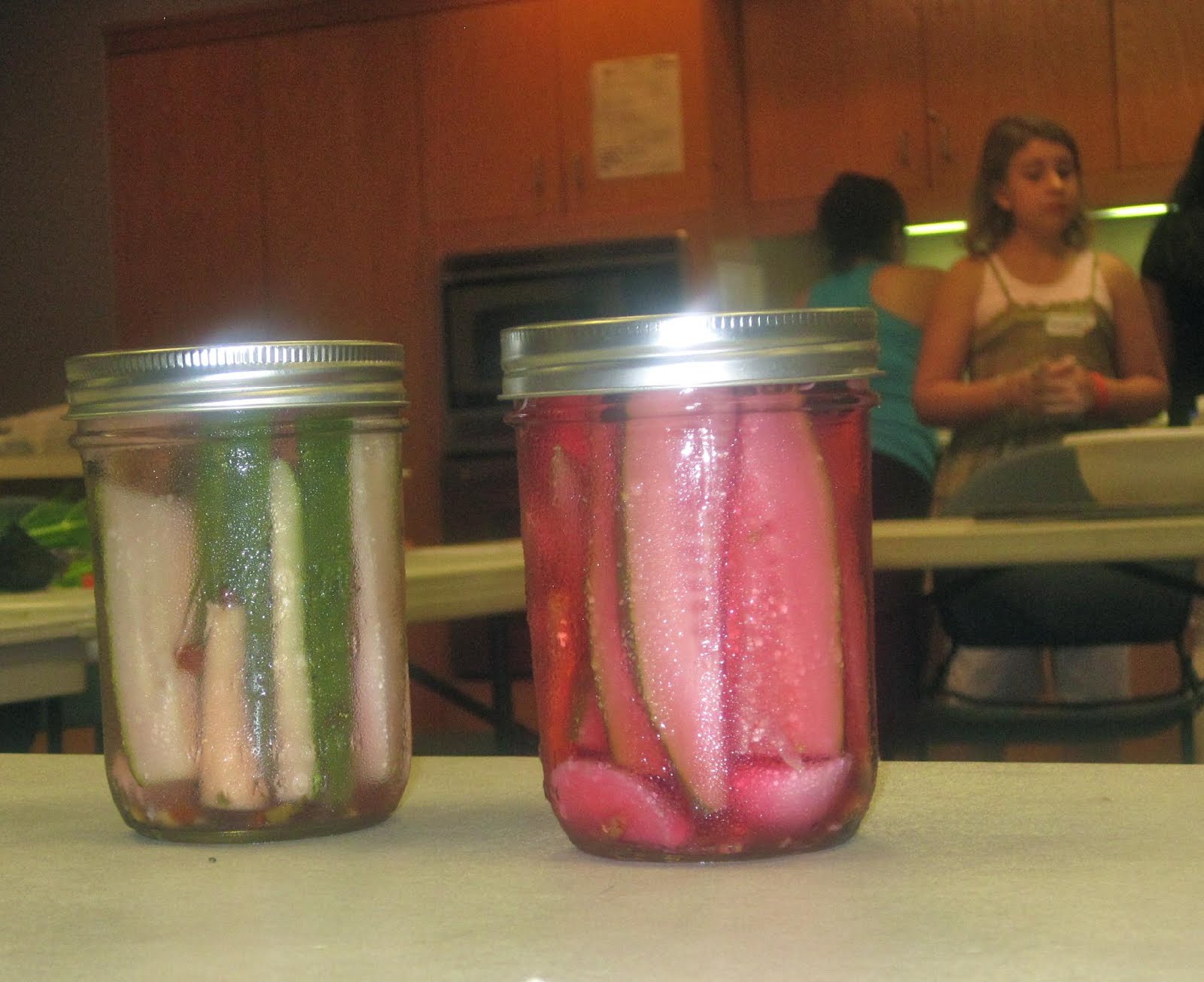
Recipe: Salmon Burgers (adapted from this recipe: http://allrecipes.com/recipe/yummy-lemon-salmon-burgers/)
Makes about 6 burgers
Freeze
leftover burgers in Tupperware or freezer bags, separating patties with
parchment or waxed paper so they won’t stick together.
Ingredients:
1 large (13 ounce) or 2 small (6.5 ounce) cans of salmon, drained and flaked with a fork (skin and bones OK!)
2 eggs
1/4 cup chopped fresh herbs (parsley, dill, or other – optional)
1/2 small onion, finely chopped
1 celery stalk, diced
1/2 cup of other vegetables, diced or grated (optional – try diced bell pepper or mushrooms, or grated squash and/or carrots.)
1/4 cup whole wheat bread crumbs
1 teaspoon lemon zest
2 tablespoons lemon juice
2 tablespoons lemon juice
1/2 teaspoon dried basil
1 pinch crushed red chili pepper
Salmon burgers can either be pan fried or baked with excellent results!
- If baking, preheat the oven to 425 degrees, and lightly grease a cookie sheet or other large baking pan with vegetable oil or cooking spray. Or, line the cookie sheet with parchment paper.
- Flake or mash the drained salmon in a big bowl, then add the eggs, onion, herbs and spices, vegetables, breadcrumbs, and lemon zest and juice. Mix well to combine.
- Form the mixture into about 6 burger-sized patties with clean hands.
- To bake: space the patties out on a greased or parchment-lined cookie sheet. Bake at 425 for 18 minutes, then remove from the oven and flip each burger with a spatula. Put them back in the oven for 10 more minutes to brown on the other side.
- To pan fry: lightly oil a griddle or frying pan, and fry each burger over medium heat for about 4 minutes on each side, or until nicely browned.
Thursday, February 7, 2013
Another One by Liese: Nutty Weather

The nutty weather this past two weeks has me reflecting on how precarious our relationship to nature is. In some ways the history of agriculture is the history of manipulating, working around, and bending nature to human needs. We depend so totally on the rhythms and cycles of our environment, and yet often we feel at odds with it, struggling to produce lettuce in January or salmon with eel DNA simply because we’ve judged what nature gives us unsatisfactory to our plans.
 I took the first two pictures last January 25th and 26th. We
literally crouched inside the low tunnels, under the plastic, to protect
ourselves and the plants from wind and sleet. The next morning we still
went to market despite the icy roads, and it turned out that the
vendors who came were also Yankee ex-patriots. We christened it “White
Saturday.”
I took the first two pictures last January 25th and 26th. We
literally crouched inside the low tunnels, under the plastic, to protect
ourselves and the plants from wind and sleet. The next morning we still
went to market despite the icy roads, and it turned out that the
vendors who came were also Yankee ex-patriots. We christened it “White
Saturday.” By the end of that day, the sun came out and melted the ice. On Tuesday January 29th, just three days later, the temperature was in the 70s and I worked on my mid-calf boot tan as I cultivated strawberries. A cold front followed and brought steady winds around 20mph and gusts of over 40mph. At Wednesday around 4pm, both of our high tunnels had been blown over.

 In many ways, I think this variability is more challenging than a
consistent extreme. It certainly keeps us busy—on top of the usual farm
chores like harvest, we had to figure out a way to protect the plants
exposed by the torn-out wind tunnels because it froze, again, that
Friday night.
In many ways, I think this variability is more challenging than a
consistent extreme. It certainly keeps us busy—on top of the usual farm
chores like harvest, we had to figure out a way to protect the plants
exposed by the torn-out wind tunnels because it froze, again, that
Friday night.Despite another cold market morning, we again saw many familiar faces. There’s our consistent bright spot—good food, great friends.
Tuesday, January 22, 2013
Guest Post From Liese: Food Is The Reason I Got Into Agriculture
Here's another great post from Liese :) You can access the original post at her blog here.
 Food is the reason I got into agriculture. It’s
not the reason I stuck with it, but it was a scrappy farmers’ market in
Abingdon, Virginia that first inspired me to really think about how food
is produced in the United States. (I intend to edit this entry with more informational links. Until I
can, many of the arguments I make here are based on research using data
from the USDA, found at this link.)
Food is the reason I got into agriculture. It’s
not the reason I stuck with it, but it was a scrappy farmers’ market in
Abingdon, Virginia that first inspired me to really think about how food
is produced in the United States. (I intend to edit this entry with more informational links. Until I
can, many of the arguments I make here are based on research using data
from the USDA, found at this link.)
So it’s appropriate that now, living on a farm, I eat more amazingly fresh, delicious food than ever. I wrote a letter to my family about my first few weeks on the farm, and I told them that “we might live like peasants, but we eat like kings.” It’s a conscious choice and effort to eat well—and when I say “eat well,” I want to be clear that while I believe all food has morals and ethics, I am referring in this instance to the money and time we spend on our meals, not that eating the way we do is in any way “morally superior” to the way other people eat. I’ll write about the problems of food ethics in another post. For now, I’m going to talk about the labor and cost and source of the food we eat on the farm.
When I say we live like peasants, I mean that Ben and Patricia and I spend a lot of time talking about what we really need in life to be happy. One of the things we agree on pretty strongly is spending more money and time on our food than most people would justify.
 The photos up above chronicle three especially profligate breakfasts:
On Sunday, Patricia made Brussels sprouts with bacon (our sprouts,
local bacon), corn bread, locally ground grits, our eggs, fried catfish
(caught off the coast of NC), and fresh tomatoes (grown in a
biodiesel-fueled local greenhouse).
The photos up above chronicle three especially profligate breakfasts:
On Sunday, Patricia made Brussels sprouts with bacon (our sprouts,
local bacon), corn bread, locally ground grits, our eggs, fried catfish
(caught off the coast of NC), and fresh tomatoes (grown in a
biodiesel-fueled local greenhouse).
On Monday, I made sausage gravy (local pork) and biscuits served with tomatoes and leftover Brussels sprouts.
On Tuesday—today—I woke up craving salad, so I tossed mizuna, arugula, and butter lettuce with homemade balsamic dressing, baked biscuits again and served them with local mozzarella and tomatoes and eggs.
(Dinners are as complicated, but I am more likely to grab my camera in the morning.)
These are not cheap or fast meals. They require a lot of time and effort to put together (usually Patricia’s) and they cost money. Local meat and fish and dairy, especially, are not cheap—the animals are not treated like factory inputs, and the people who care for them are not treated like replaceable parts.
 Many processed foods in the United States are heavily subsidized in
both obvious and subtle ways, and many, many people rely upon the
affordability and the ease of those processed foods. Given the cost of
housing and health insurance in our country, not to mention the steady
decline of wages, the increase in hours worked outside the home, and the
pressure to spend money on consumer goods, cheap, convenient food makes
sense for most people. It’s efficient, after all, right? Fewer hours in
the kitchen mean more hours to work.
Many processed foods in the United States are heavily subsidized in
both obvious and subtle ways, and many, many people rely upon the
affordability and the ease of those processed foods. Given the cost of
housing and health insurance in our country, not to mention the steady
decline of wages, the increase in hours worked outside the home, and the
pressure to spend money on consumer goods, cheap, convenient food makes
sense for most people. It’s efficient, after all, right? Fewer hours in
the kitchen mean more hours to work.
So it follows that it’s illogical and inefficient that Patricia and Ben and I make veritable feasts two or three times a day. In terms of gender, it’s unfair that Patricia does the most reproductive labor on the farm. If we went out to eat or bought frozen meals, she could spend more time working outside with Ben and I (she definitely wants to!). The farm could make more money if we all worked more, we could all be paid better, and we could buy more expensive food.
Maybe we could invest in someone who would turn local food products into processed meals, so we could assuage some of our guilt about not giving our money to our neighbors. It would be expensive to do that, so we’d have to talk our neighbors into selling their products more cheaply, but perhaps they could just pack a few more chickens into the coop to make up the loss. They could eat a few less of their own eggs, too, and maybe work an extra few hours on the weekend. If their neighbor can’t compete and goes out of business, well, that’s an opportunity to expand and make more money. Never mind if it’s a loss for the community.
Soon our local food frozen meals will take off, and we’ll be rolling in cash. We’ll donate some money to charities to support our neighbors who’ve been forced to sell their farms, but most of it we’ll keep for ourselves. We’ll buy a flat screen TV, and maybe we’ll hire a personal chef to keep making us delicious food. We deserve to be comfortable. We worked hard, and sacrificed leisure time, and it paid off. Right?
While my tongue is firmly in cheek, and this is a highly unlikely scenario, I do think it embodies many of the choices—and lack of choices—facing the middle and working class in America. Is there another option?
For us, we work a little less so that we can savor our meals. We try to share babycare so Patricia can participate more; I am trying to cook more often. We make less money than we could, in theory; Ben says that making money on the farm has as much to do with spending less money than bringing more in. None of us has outside jobs; we don’t have health insurance (we’d sure like it, if buying independently was more affordable).
I like this life. I don’t think it’s without complications or issues—we don’t buy exclusively local food, and I have a chocolate problem—but I am happier with this simplicity than any moment in which I had plenty of money and not enough time or space to enjoy it. Illogical, inefficient, full of love and meaning and intention. I’ll take it.

So it’s appropriate that now, living on a farm, I eat more amazingly fresh, delicious food than ever. I wrote a letter to my family about my first few weeks on the farm, and I told them that “we might live like peasants, but we eat like kings.” It’s a conscious choice and effort to eat well—and when I say “eat well,” I want to be clear that while I believe all food has morals and ethics, I am referring in this instance to the money and time we spend on our meals, not that eating the way we do is in any way “morally superior” to the way other people eat. I’ll write about the problems of food ethics in another post. For now, I’m going to talk about the labor and cost and source of the food we eat on the farm.
When I say we live like peasants, I mean that Ben and Patricia and I spend a lot of time talking about what we really need in life to be happy. One of the things we agree on pretty strongly is spending more money and time on our food than most people would justify.
 The photos up above chronicle three especially profligate breakfasts:
On Sunday, Patricia made Brussels sprouts with bacon (our sprouts,
local bacon), corn bread, locally ground grits, our eggs, fried catfish
(caught off the coast of NC), and fresh tomatoes (grown in a
biodiesel-fueled local greenhouse).
The photos up above chronicle three especially profligate breakfasts:
On Sunday, Patricia made Brussels sprouts with bacon (our sprouts,
local bacon), corn bread, locally ground grits, our eggs, fried catfish
(caught off the coast of NC), and fresh tomatoes (grown in a
biodiesel-fueled local greenhouse).On Monday, I made sausage gravy (local pork) and biscuits served with tomatoes and leftover Brussels sprouts.
On Tuesday—today—I woke up craving salad, so I tossed mizuna, arugula, and butter lettuce with homemade balsamic dressing, baked biscuits again and served them with local mozzarella and tomatoes and eggs.
(Dinners are as complicated, but I am more likely to grab my camera in the morning.)
These are not cheap or fast meals. They require a lot of time and effort to put together (usually Patricia’s) and they cost money. Local meat and fish and dairy, especially, are not cheap—the animals are not treated like factory inputs, and the people who care for them are not treated like replaceable parts.

So it follows that it’s illogical and inefficient that Patricia and Ben and I make veritable feasts two or three times a day. In terms of gender, it’s unfair that Patricia does the most reproductive labor on the farm. If we went out to eat or bought frozen meals, she could spend more time working outside with Ben and I (she definitely wants to!). The farm could make more money if we all worked more, we could all be paid better, and we could buy more expensive food.
Maybe we could invest in someone who would turn local food products into processed meals, so we could assuage some of our guilt about not giving our money to our neighbors. It would be expensive to do that, so we’d have to talk our neighbors into selling their products more cheaply, but perhaps they could just pack a few more chickens into the coop to make up the loss. They could eat a few less of their own eggs, too, and maybe work an extra few hours on the weekend. If their neighbor can’t compete and goes out of business, well, that’s an opportunity to expand and make more money. Never mind if it’s a loss for the community.
Soon our local food frozen meals will take off, and we’ll be rolling in cash. We’ll donate some money to charities to support our neighbors who’ve been forced to sell their farms, but most of it we’ll keep for ourselves. We’ll buy a flat screen TV, and maybe we’ll hire a personal chef to keep making us delicious food. We deserve to be comfortable. We worked hard, and sacrificed leisure time, and it paid off. Right?
While my tongue is firmly in cheek, and this is a highly unlikely scenario, I do think it embodies many of the choices—and lack of choices—facing the middle and working class in America. Is there another option?
For us, we work a little less so that we can savor our meals. We try to share babycare so Patricia can participate more; I am trying to cook more often. We make less money than we could, in theory; Ben says that making money on the farm has as much to do with spending less money than bringing more in. None of us has outside jobs; we don’t have health insurance (we’d sure like it, if buying independently was more affordable).
I like this life. I don’t think it’s without complications or issues—we don’t buy exclusively local food, and I have a chocolate problem—but I am happier with this simplicity than any moment in which I had plenty of money and not enough time or space to enjoy it. Illogical, inefficient, full of love and meaning and intention. I’ll take it.
Wednesday, January 16, 2013
Lovely Liese
Hi y'all! It's been ages since I've (Patricia) been able to post much about what's going on here at the farm. As you know, we had a baby in July. He's taken up whatever spare time I would normally have for blog writing, hence the break in writing. Unlike most babies, this one hardly ever slept during the day (he's finally beginning to nap!), so I didn't have the usual break I hear about from other mamas. Anyway, it turns out our lovely apprentice, Liese, is writing farm blog posts already, so I've asked her permission to share them here as well (which she granted). You can learn about Liese in the "About Us" tab above. Here's her first farm post, written while we were still visiting family in Germany (you can read the original post here):

I’ve planned out so many thoughtful, creative, official “first farm blog” posts, but I haven’t succeeded at writing them down. So, in the name of words on the screen, I’ll barrel forth.
I moved onto the farm about three weeks ago. The first week was a whirlwind. I had to get my body into the rhythm of early days and nights and protracted physical labor, and my mind into the reality of abandoning familiar surroundings and routines. There’s the shock of leaving behind one of my cats and my dear, wonderful roommate and moving away from friends I used to be able to pop down the hall or next door to visit with. Then there’s moving into someone else’s space, and trying not to be a bother to friends you adore, even though you’re living on top of them. The last year, though, has been pretty constant change, so I was better prepared for the transition—and since I’m planning on living in a yurt, I ought to be amenable to a nomadic life.
With the help of a lot of neighbors and friends, we got the big greenhouse built AND planted before Ben and Patricia and Elliott went off to Germany. There wasn’t much to do in terms of preparing the farm for their absence, other than giving me a refresher course on the tunnels and a list of chores to accomplish.
Right before Christmas, Ben allowed a high school student to complete his school project on the farm; C was required to do 15 hours of farm work and write a report about it. Of those 15 hours, he probably spent 2-3 harvesting and 2-3 planting—in other words, about a third of it was what you expect to do on a farm. The rest of the work involved marking beds, pulling up drip tape, stakes, and string from the old pepper and tomato fields (in our defense, the baby was born at the end of pepper and tomato season!), washing and sorting produce, building the greenhouse, building a high tunnel, and weeding.That’s exactly what I love about farming (and what scares me about doing it on my own)—it’s so diverse, and there are constantly new problems to solve.
While P&B&E (peanut butter and Elliott) have been away, I’ve washed all the produce bins, cultivated carrots, turnips, and spinach, washed racks to go in the walk-in cooler, washed the walk-in cooler, washed and packed eggs, cultivated berries, fed the chickens lots of leftover produce, cleaned the chicken yard, cleaned up the seedling tunnel and watered seedlings, built a low tunnel, raised and lowered tunnels as needed, got my truck stuck in the mud, got my truck out of the mud with help from a neighbor, finished pulling drip take, lay drip tape in the new greenhouse, et cetera!
I’ve also begun planning out my own agricultural ventures. In addition to helping with what Ben and Patricia have already established, I’m planning on adding flowers, mushrooms, herbs and my own chickens to the mix. I’ve spent quite a lot of time poring over catalogs and dreaming up the ideal chicken tractor—but, as of yet, I haven’t spent any money. I’m waiting to consult with P&B, and I have a very non-agricultural vacation coming up to worry about.
So far, I’m happy. I spend a lot of time laughing at Charlie, the dog, and laughing or yelling at the chickens. (I planted bulbs around the house, and it’s been hard to keep the damn birds away from them.) It’s amazing to spend so much time outside, but also surprises me how easy it is to not notice the nature around me. I have to remind myself to stop and watch for bluebirds or the resident red tail hawk, because I get so caught up in the work.
I’m ready for peanut butter and Elliott to get back. I miss hearing the baby laugh, and I miss waking up to coffee and good company (I’m so, so spoiled). I like hard, dirty, demanding work, but I like it even better when it’s shared with people I love. Being alone is too easy, in some ways.
Thinking of being alone, I listened and watched a few hundred starlings whipping around the sky this afternoon. When I was a child, I watched starlings at the bird feeder with my grandmother; as an adult, they are the subject of one of my favorite poems, “Starlings in Winter” by Mary Oliver. My family crest tattoo features a starling, for those reasons and because, most importantly, starlings are never alone, and as I watched the starlings today, I thought about how hard it is to be afraid when you are surrounded by loved ones.
- - -
“Starlings in Winter” by Mary Oliver
Chunky and noisy,
but with stars in their black feathers,
they spring from the telephone wire
and instantly
they are acrobats
in the freezing wind.
And now, in the theater of air,
they swing over buildings,
dipping and rising;
they float like one stippled star
that opens,
becomes for a moment fragmented,
then closes again;
and you watch
and you try
but you simply can’t imagine
how they do it
with no articulated instruction, no pause,
only the silent confirmation
that they are this notable thing,
this wheel of many parts, that can rise and spin
over and over again,
full of gorgeous life.
Ah, world, what lessons you prepare for us,
even in the leafless winter,
even in the ashy city.
I am thinking now
of grief, and of getting past it;
I feel my boots
trying to leave the ground,
I feel my heart
pumping hard, I want
to think again of dangerous and noble things.
I want to be light and frolicsome.
I want to be improbable beautiful and afraid of nothing,
as though I had wings.
(Source: writersalmanac.publicradio.org)

I’ve planned out so many thoughtful, creative, official “first farm blog” posts, but I haven’t succeeded at writing them down. So, in the name of words on the screen, I’ll barrel forth.
I moved onto the farm about three weeks ago. The first week was a whirlwind. I had to get my body into the rhythm of early days and nights and protracted physical labor, and my mind into the reality of abandoning familiar surroundings and routines. There’s the shock of leaving behind one of my cats and my dear, wonderful roommate and moving away from friends I used to be able to pop down the hall or next door to visit with. Then there’s moving into someone else’s space, and trying not to be a bother to friends you adore, even though you’re living on top of them. The last year, though, has been pretty constant change, so I was better prepared for the transition—and since I’m planning on living in a yurt, I ought to be amenable to a nomadic life.
With the help of a lot of neighbors and friends, we got the big greenhouse built AND planted before Ben and Patricia and Elliott went off to Germany. There wasn’t much to do in terms of preparing the farm for their absence, other than giving me a refresher course on the tunnels and a list of chores to accomplish.
Right before Christmas, Ben allowed a high school student to complete his school project on the farm; C was required to do 15 hours of farm work and write a report about it. Of those 15 hours, he probably spent 2-3 harvesting and 2-3 planting—in other words, about a third of it was what you expect to do on a farm. The rest of the work involved marking beds, pulling up drip tape, stakes, and string from the old pepper and tomato fields (in our defense, the baby was born at the end of pepper and tomato season!), washing and sorting produce, building the greenhouse, building a high tunnel, and weeding.That’s exactly what I love about farming (and what scares me about doing it on my own)—it’s so diverse, and there are constantly new problems to solve.
While P&B&E (peanut butter and Elliott) have been away, I’ve washed all the produce bins, cultivated carrots, turnips, and spinach, washed racks to go in the walk-in cooler, washed the walk-in cooler, washed and packed eggs, cultivated berries, fed the chickens lots of leftover produce, cleaned the chicken yard, cleaned up the seedling tunnel and watered seedlings, built a low tunnel, raised and lowered tunnels as needed, got my truck stuck in the mud, got my truck out of the mud with help from a neighbor, finished pulling drip take, lay drip tape in the new greenhouse, et cetera!
I’ve also begun planning out my own agricultural ventures. In addition to helping with what Ben and Patricia have already established, I’m planning on adding flowers, mushrooms, herbs and my own chickens to the mix. I’ve spent quite a lot of time poring over catalogs and dreaming up the ideal chicken tractor—but, as of yet, I haven’t spent any money. I’m waiting to consult with P&B, and I have a very non-agricultural vacation coming up to worry about.
So far, I’m happy. I spend a lot of time laughing at Charlie, the dog, and laughing or yelling at the chickens. (I planted bulbs around the house, and it’s been hard to keep the damn birds away from them.) It’s amazing to spend so much time outside, but also surprises me how easy it is to not notice the nature around me. I have to remind myself to stop and watch for bluebirds or the resident red tail hawk, because I get so caught up in the work.
I’m ready for peanut butter and Elliott to get back. I miss hearing the baby laugh, and I miss waking up to coffee and good company (I’m so, so spoiled). I like hard, dirty, demanding work, but I like it even better when it’s shared with people I love. Being alone is too easy, in some ways.
Thinking of being alone, I listened and watched a few hundred starlings whipping around the sky this afternoon. When I was a child, I watched starlings at the bird feeder with my grandmother; as an adult, they are the subject of one of my favorite poems, “Starlings in Winter” by Mary Oliver. My family crest tattoo features a starling, for those reasons and because, most importantly, starlings are never alone, and as I watched the starlings today, I thought about how hard it is to be afraid when you are surrounded by loved ones.
- - -
“Starlings in Winter” by Mary Oliver
Chunky and noisy,
but with stars in their black feathers,
they spring from the telephone wire
and instantly
they are acrobats
in the freezing wind.
And now, in the theater of air,
they swing over buildings,
dipping and rising;
they float like one stippled star
that opens,
becomes for a moment fragmented,
then closes again;
and you watch
and you try
but you simply can’t imagine
how they do it
with no articulated instruction, no pause,
only the silent confirmation
that they are this notable thing,
this wheel of many parts, that can rise and spin
over and over again,
full of gorgeous life.
Ah, world, what lessons you prepare for us,
even in the leafless winter,
even in the ashy city.
I am thinking now
of grief, and of getting past it;
I feel my boots
trying to leave the ground,
I feel my heart
pumping hard, I want
to think again of dangerous and noble things.
I want to be light and frolicsome.
I want to be improbable beautiful and afraid of nothing,
as though I had wings.
(Source: writersalmanac.publicradio.org)
Sunday, January 13, 2013

Sign Up for 2013 Spring CSA is now OPEN!
Sign Up HERE
Sign Up HERE
WHY JOIN OUR CSA?
CSA is a mutually beneficial relationship
between us. By making an investment in our farm with a CSA share, you become a
seasonal farm member who shares the rewards and risks of the harvest season
with us, your farmers. This makes you a co-producer. Your investment allows us
to afford annual start-up costs, to pay ourselves fair wages, and to share the
risks of growing food. In return, we provide you and your family with fresh,
healthy, local vegetables, fruits and eggs. Our food not only tastes better
and keeps longer, it also helps us all nourish local agriculture, economy and
environment. Taste the difference!
Members Receive:
- About two grocery bags of 7-10 seasonal sustainably grown vegetables and herbs (more for large shares)
- A weekly email with produce information, cooking and storage tips, recipes and segments about life on and off the farm.
- Access to an online recipe sharing site.
Members Also Enjoy:
- Convenient pick up locations and times throughout the week.
- Access to our farm for volunteering, exploring and relaxing.
- Invitations to on-farm events, such as our annual OktoberFEAST and Spring planting parties.
- Making new friends who share your interest in good food and good farming.
HOW IT WORKS
Join In Good Heart’s CSA by
purchasing a share at the beginning of the season. You then visit the weekly
pickup site to pack your own vegetables from the harvest table. We will post a
guide at the stand explaining what each share contains that week. You will
bring your own bags and pick out the produce for yourself “market-style”. The Spring CSA harvest season runs for 16 weeks
from April through July.
Pickup Sites &
Times: We have three weekly
CSA pickup sites.
- Raleigh pickup is Tuesday evenings from 4:30pm to 6;30pm at the Five Points CSA site, 1911 Bernard St., Raleigh 27608.
- We also we have On-Farm pickup is from 4pm to 7pm on Wednesdays at 1000 McLemore Road in Clayton, NC 27520.
- Finally, we offer limited pickup every Saturday morning from 8am to 12pm at the Western Wake Farmers Market, 1225 Morrisville Carpenter Rd, Cary 27519
Share Sizes: We offer three share sizes.
- Our Large Share ($480) is a suitable amount of produce for a large household of 4+ people, or a couple of hungry vegetarians, to eat for a week.
- Our Regular Share ($320) is a suitable amount of produce for a small household of 1 to 3 people, or 1 hungry vegetarian, to eat for a week.
- Our Small Share ($200) is the same size as the regular share, but the pick ups are every other week rather than weekly.
Full Year CSA Discount:
We are offering a 5% discount for folks who would like to pay for their Spring and Fall shares in full early in the year. Please inquire for more details.
Payment and Sign Up:
We are offering a 5% discount for folks who would like to pay for their Spring and Fall shares in full early in the year. Please inquire for more details.
Payment and Sign Up:
Please make checks payable to In Good Heart Farm and mail to:
1000 McLemore Road
Clayton, NC 27520
You may pay by mail with check or in person with check, cash or card. Your early and full support is important to us. Members who pay in full by February 15th, pay the flat membership fees above. However, we realize that some of you may not be able to pay in full or before February 15th. As such, we offer a payment plan and a late sign up fee of $25 (details are contained within the sign up form).
To sign up for our CSA, please fill out the form here and send along your payment.
OTHER INFORMATION
Sharing with others: Some
members find it enjoyable to split CSA shares with other families &
friends. We also like to share food and enjoy such arrangements. If you choose
to split a share, please let us know at the beginning of the season so we may
avoid confusion.
Communication: Our main mode of communication is email. We will send you weekly emails usually at the
beginning of the week. Our emails usually include farm updates, a list of that
weeks veggies, a copy of the weekly newsletter, and any notifications regarding
pickup.
Please email us at InGoodHeartFarmNC@gmail.com if you have any questions or concerns.
Saturday, January 12, 2013
2013 CSA Sign Up Open Monday, January 14th

- The Spring CSA will begin early April and run for 16 weeks through July.
- We are offering three share size options: large ($480), regular ($320) and small ($200).
- We will offer three pick up locations: the farm, Western Wake Farmers' Market and Five Points (1911 Bernard Street) in Raleigh.
Subscribe to:
Posts (Atom)